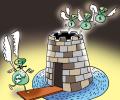
Analysts said even though the Indian economy is expected to slow down to 7.2 per cent in fiscal 2020, it is still the best bet for investment for foreign investors.

Insolvency and Bankruptcy Code bound stocks have witnessed a steep fall in 2018.

Of the 23 Indian billionaires mentioned in the Bloomberg Billionaires Index, only one saw a reduction in net worth, with the companies owned by most of them outperforming the Nifty 50 index by a big margin.

The return of private investment now struggles with lack of funds and election-driven uncertainty.
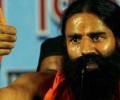
Yoga guru Baba Ramdev's Patanjali Ayurved on Wednesday made its first big acquisition when it paid Rs 4,350 crore to take over soya food brand Nutrela-maker Ruchi Soya through an insolvency process. The acquisition will help Patanjali acquire edible oil plants as also soyabean oil brands such as Mahakosh and Ruchi Gold.

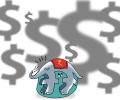
With $120 billion worth of deals, 2018 was the best year on record. Many also blame frequent policy flip-flops and increasing tax scrutiny as big dampners for business.
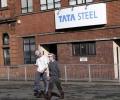
The Anglo-Dutch merger was meant to revive the ailing British Steel which had incurred a net loss of 81 million in the year ended March 31, 1999
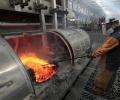
In the domestic segment, demand is currently led by rural markets, oil and gas, LPG and B2C segments like roofing and sheeting.

With the dizzying rise in the number of Covid-19 cases in the country, India Inc has transitioned from a wait-and-watch policy to full-on emergency mode, bringing back remote and flexi work, stringent safety protocols, and allowing only essential travel. Companies - especially in metros like Delhi, Mumbai and Kolkata - that had adopted a hybrid work model during the last few months when the caseload remained low, are either switching back entirely to work-from-home (WFH), or calling skeletal staff to office on select days. Take the case of cigarettes-to-hotels major, ITC, which had been on a hybrid work model over the last few months.

Russia's war on Ukraine has sent steel prices soaring to its highest levels in the domestic market since November 2021. But there is little cheer in the industry. That's because input costs are spiralling out of control, leaving the big boys nearly as high and dry as the small, medium and secondary steel producers. Russia and Ukraine are major providers of steel and raw materials to the world.

Anish Kapoor's Descension, first envisioned for the 2014-2015 Kochi-Muziris Biennale, has now been installed as a large-scale outdoor piece in Brooklyn.

Metal prices from copper to aluminum and tin have shot up by about 7-32 per cent in the past three months.

Investors must be prepared to believe that things will get better eventually, no matter how bad the current situation may look. If you don't possess this optimism, you will not possess the courage to invest and if you don't invest, you don't give yourself any chance to get wealthy, says Devangshu Datta.

News of all that's transpired on and off the football field

When 17 million Indians seek their fortune abroad it only means people are losing faith in the government's ability to honour its promises, says Sunanda K Datta-Ray.
The government-run Invest In France Agency, tasked with attracting overseas business, has identified 300 Indian companies, mainly in IT and pharma sectors, as prospective investors in this country and plans to launch vigorous campaigns to tap these.
The rosy picture of India Inc's acquisition spree both at home and abroad could dissolve into a nightmare if employee related issues post-M&As are not taken care of strategically.

Relatives of five Indian passengers, travelling by the missing Malaysia Airlines plane, are anxiously waiting for any information about the fate of the aircraft and their loved ones.

Those involved in the discussions say the guidelines for selection of bidders in insolvency cases need to be transparent, otherwise anyone who loses out could take legal recourse, leading to wastage of time and derailing the whole process.
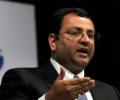
Mistry's intention of selling ailing steel maker Corus, Tata's so-called feather in the cap, was one reason for his ouster
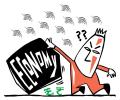
'The slide in growth has arisen primarily because we have an NBFC crisis on top of a banking crisis,' points out T T Ram Mohan.

The annual talk-fest of rich and powerful from across the world in snow-laden Alpine resort town of Davos will be attended by nearly 40 heads of government among more than 2,500 global leaders from over 100 countries.
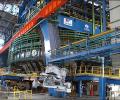
The British government has been under pressure to help a sale process go through after Tata said it would sell its British business.

The need for larger investment in infrastructure that is the biggest shortcoming, says A V Rajwade.

The 2016 upstart, called Jio, dislodged rivals and has emerged as the nation's No. 4 carrier by offering call services free for life and data transmission at dirt cheap rates.
The combined networth of India's 100 wealthiest is $381 billion (nearly Rs 25.5 lakh crore), a rise of 10 per cent from $ 345 billion in 2015
A key point to understand is that Ford is selling these brands not because they are in their worst trouble ever, but simply because of Ford's overall crisis - it lost more than $12.6 billion in 2006 - is pushing CEO Alan Mulally to raise money to fulfill his declared ambition to restore the mass-market Ford business to health.


Hemant Shivsaran lists the number of projects the Modi government has announced since August to woo Gujarat voters.

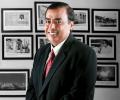
Reliance chairman Mukesh Ambani has moved 2 ranks ahead this year on the most powerful list.

Britain's traditionally anti-EU media have blamed Brussels for preventing London from taking greater steps to protect the industry.

Indian CEOs might like to make some serious course correction.

Those scheduled to attend the five-day WEF Annual meeting, beginning January 21, include more than 40 heads of state or government, including those from the UK, Australia, Japan, Iran, Israel, Pakistan, Brazil, Italy, Mauritius, Republic of Korea and Switzerland, WEF announced on Wednesday at a press conference in Geneva.

The financial year ending Saturday saw such big-ticket events that set the directional tone for the country's business journey.
